CT Dose Analytics · Leapfrog Compliance · AI Validation

Precision Imaging
Analytics —
Without the
Enterprise Overhead.

gammametric.com

Most imaging providers and research organizations don't know the gap between what their equipment is supposed to do and what it's actually doing. GammaMetric closes that gap — through CT dose analytics, protocol optimization, and imaging AI validation.

CT Dose Analysis
Leapfrog Section 8B
DEMO MEDICAL CENTER · FY 2025 · GAMMAMETRIC
PHYSICIST REVIEWED
Head P25: 854P50: 963P75: 1021 ACCEPTABLE
Chest P25: 287P50: 358P75: 422 EXCELLENT
Abd-Pelvis P25: 562P50: 692P75: 758 ACCEPTABLE
<1 yr P50: 273 EXCELLENT
1–4 yr P50: 322 EXCELLENT
5–9 yr P50: 566 ABOVE
10–14 yr P50: 340 EXCELLENT
15–17 yr P50: 367 EXCELLENT
Sample Leapfrog Section 8B Report Output
AI Validation Report
PILOT STUDY · LIDC-IDRI · GAMMAMETRIC
RESEARCH
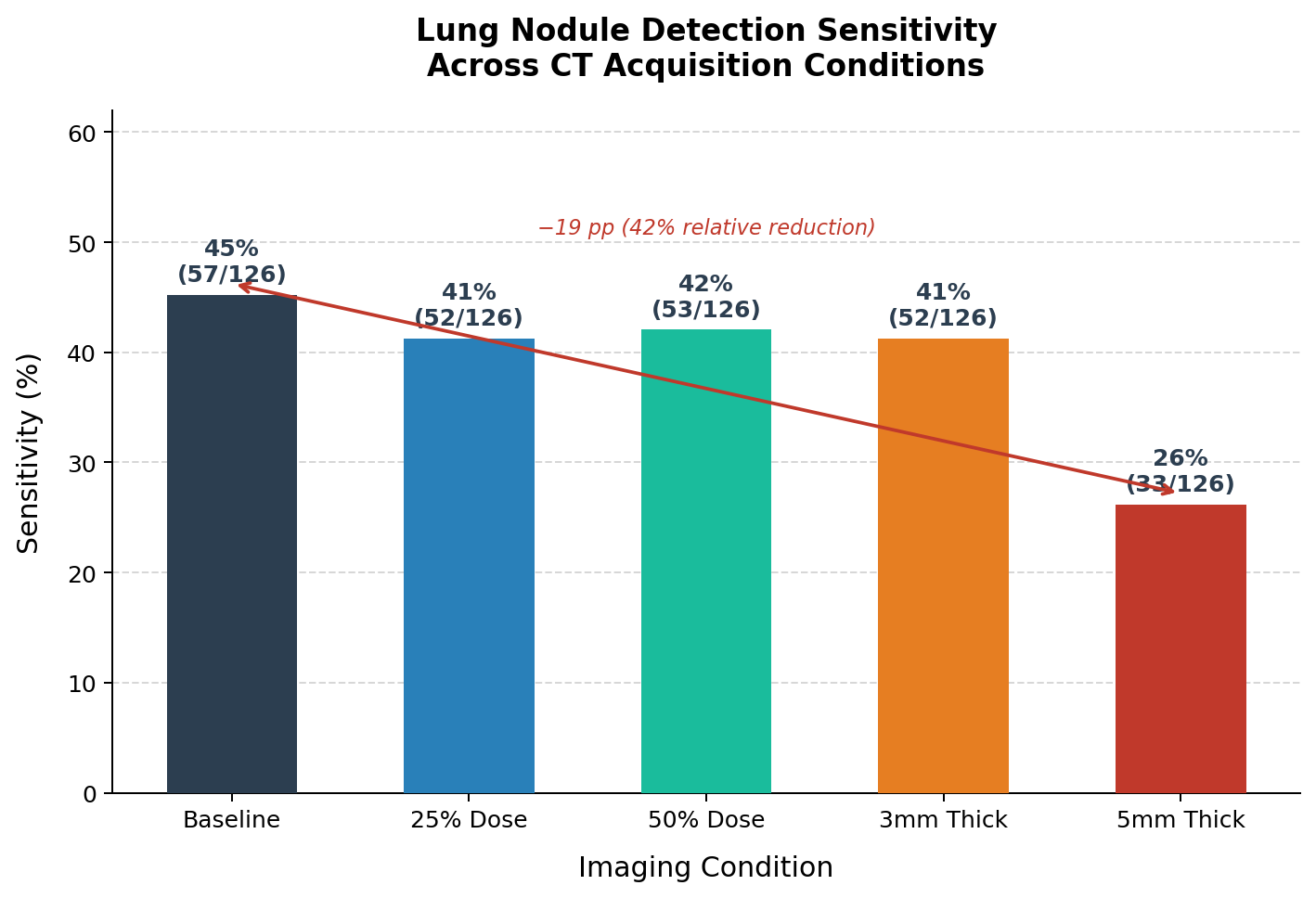
Lung nodule detection sensitivity by CT acquisition condition
In GammaMetric's pilot study, lung nodule detection AI lost 42% relative sensitivity at 5mm slice thickness versus standard protocol. Most facilities have never measured this gap on their own systems.
Credentials
Yale School of Medicine Diagnostic Physics Residency
ABR Board-Eligible Diagnostic Medical Physicist
ACR Dose Index Registry Benchmarks
De-identified Data Only — No PHI Required
Services

Delivered today.
Built for tomorrow.

Physicist-led CT dose analytics and protocol optimization now, with AI validation and a continuous monitoring platform on the roadmap.

Available Now

CT Dose Analytics & Protocol Optimization

  • Leapfrog Section 8B pediatric CT dose reporting
  • Adult CT DLP percentiles — all body regions
  • ACR DIR national benchmark comparisons with status flags
  • Outlier detection with methodology notes
  • Protocol optimization observations — actionable recommendations for dose reduction and consistency
  • Physicist-reviewed PDF report suitable for quality committee or Leapfrog submission reference
  • Direct physicist support via email
  • 24–48 hour turnaround
  • CT imaging AI robustness validation — limited pilot engagements, inquire
Platform Roadmap

Continuous Monitoring Platform

  • ✓ Self-serve CT dose analytics — Available Now at dose.gammametric.com
  • Continuous post-deployment AI performance monitoring
  • Multi-scanner and multi-site variability analysis
  • Regulatory documentation support (FDA post-market surveillance)
  • Quarterly dose monitoring with performance snapshots
  • Cross-facility benchmarking for health systems
  • Fluoroscopy dose tracking (KAP, air kerma)
  • Subscription analytics and protocol optimization
In Development — Late 2026
Research & Advanced Imaging

Support for imaging performance and variability in research, multi-site, and non-routine clinical contexts.

  • MRI & Fluoroscopy Protocol Review — Acquisition parameter evaluation, consistency assessment, and variability characterization across systems and operators
  • Multi-site Harmonization — Protocol difference identification and impact on cross-site comparability in trials or distributed imaging environments
  • Quantitative Imaging & Endpoint Validation — Assessment of how acquisition variability affects measurement stability, AI outputs, and derived imaging biomarkers
The Problem

There's a gap between what your
equipment is supposed to do —
and what it's actually doing.

Most imaging providers and research organizations are flying blind. Dose settings drift. Protocols go unreviewed. AI tools get deployed without validation against real acquisition conditions. The gap is invisible until something goes wrong.

01

Protocol Creep Is Silent

Dose settings from years ago are still running on most outpatient CT scanners. Nobody decided to keep them — nobody decided to change them either. The result is unnecessary dose, inconsistent image quality, and benchmarks that quietly drift out of range.

02

Compliance ≠ Optimization

Passing Leapfrog Section 8B means your numbers are below the threshold — not that your protocols are optimized. Most facilities stop at compliance. The gap between "acceptable" and "excellent" is where dose reduction opportunities live.

03

Your AI Wasn't Validated On Your Conditions

FDA-cleared imaging AI is tested at controlled dose levels and standard protocols. Your facility runs lower doses, thicker slices, and varied techniques. Nobody tested what happens in that gap — until now.

The Process

Two ways to get
your report

Start free and self-serve, or engage a physicist for a reviewed report with narrative and submission support.

Free · Self-Serve

Instant Automated Report

Upload your CSV at dose.gammametric.com. Get DLP percentiles, ACR DIR benchmark comparisons, pediatric strata, and outlier flags in seconds — no account required.

Try It Free →
$1,500 · Physicist-Reviewed

Full Reviewed Report

A diagnostic medical physicist reviews your data, adds protocol observations and narrative, validates edge cases, and delivers a PDF report with methodology documentation — within 24–48 hours.

Request a Report →
01

Export Your Data

Export a de-identified CSV from Radimetrics, DoseWatch, or any PACS dose module. Column formats are auto-detected across common dose systems.

02

Upload or Send

Use the free self-serve tool for an instant automated report, or send your file to GammaMetric for physicist review and a submission-ready deliverable.

03

Get Your Report

Instant automated output via the free tool, or a professional physicist-reviewed PDF with protocol observations and methodology documentation within 24–48 hours.

Report Contents

Everything your quality
program needs

Compliance

Leapfrog Section 8B Reporting

Median DLP for routine head and abdomen-pelvis CT across all five Leapfrog pediatric age groups (<1, 1–4, 5–9, 10–14, 15–17) — formatted and ready for Section 8B reference.

Benchmarking

ACR DIR Benchmark Comparisons

Your facility's dose percentiles compared against ACR Dose Index Registry national reference levels. Clear status flags — Excellent, Acceptable, or Above Benchmark — for every body region.

Quality

Outlier Detection

Automatic identification of exams with unusually high DLP — repeat acquisitions, wrong protocols, or multi-phase studies — with transparent methodology notes for your physics team.

Optimization

Protocol Observations

Physicist observations on protocol consistency, scanner variability, and dose reduction opportunities — useful context for your quality improvement program beyond compliance reporting.

Trend

Dose Trends Across Reporting Period

Dose trends visualized across your full reporting period. Identify protocol changes, scanner drift, or technologist variability — supporting ongoing QA program development beyond Leapfrog season.

Deliverable

Professional PDF Report

Publication-quality output with percentile tables, benchmark charts, methodology documentation, and your facility name — suitable for quality committee presentation or Leapfrog submission reference.

Context

The performance gap
is measurable

GammaMetric's own pilot study quantifies how acquisition variability affects imaging AI — and why protocol optimization matters beyond compliance.

~4pp

Sensitivity drop in CT lung nodule detection AI at 25% dose reduction — a protocol choice many facilities make routinely, with unquantified impact.

~19pp

Sensitivity drop at 5mm slice thickness versus standard. The gap between your protocol and the vendor's validation conditions is rarely measured.

<48 hrs

GammaMetric turnaround from data submission to physicist-reviewed dose analytics or protocol optimization report.

Pricing

Transparent pricing.
No annual contracts.

Start free. Upgrade to physicist review when you need it.

Free Tool
$0
always free · no account required
  • Instant automated analysis
  • Adult CT DLP percentiles — all body regions
  • Pediatric CT — all five Leapfrog age strata
  • ACR DIR national benchmark comparisons
  • Outlier detection
  • Print-ready PDF output
  • No physicist review or narrative
Try It Free →
Health System Pricing

10+ facilities? Volume pricing starts at $600/facility, with cross-facility benchmarking and consolidated system-level reporting.

Contact for Health System Pricing →
FAQ

Common questions

What data format do you accept?
CSV exports from Radimetrics (Bayer), DoseWatch (GE), or any dose monitoring system. Manual PACS query exports are also accepted. Common column naming conventions are auto-detected. Non-standard formats are welcome — format mapping is handled before analysis begins.
Is my data secure?
De-identifying patient data before sending is strongly recommended — the analysis only requires dose metrics, exam descriptions, and patient age. No PHI is needed or requested. Raw data files are not retained after analysis is complete.
What Leapfrog section does this cover?
Section 8B: Pediatric Computed Tomography (CT) Radiation Dose. This requires reporting median DLP for routine head and abdomen-pelvis CT across five pediatric age groups. Reports provide exactly those data points, plus adult CT analysis as a value-add for your quality program.
Is this a replacement for a medical physicist?
No. Every report includes review by a diagnostic medical physicist, but final interpretation, regulatory compliance, and clinical protocols remain the responsibility of your institution and its qualified physics staff. GammaMetric is a reporting and analytics service, not a substitute for physics oversight.
How are benchmarks determined?
Dose percentiles are compared against ACR Dose Index Registry (DIR) national reference levels, maintained and updated by a diagnostic medical physicist to reflect current national practice.
What does an AI validation engagement look like?
You provide de-identified DICOM data or model outputs across your facility's acquisition conditions (dose levels, slice thicknesses, protocols). GammaMetric applies systematic degradation and inference to quantify sensitivity loss and failure modes under each condition — delivered as a physicist-reviewed report with methodology documentation suitable for quality committee or regulatory review.
What's coming on the platform roadmap?
The self-serve CT dose analytics tool is live now at dose.gammametric.com. Coming in late 2026: a continuous AI monitoring platform — upload imaging data, receive robustness metrics and failure mode analysis on a recurring basis — plus quarterly dose monitoring, multi-scanner benchmarking, and regulatory documentation support. Contact us to share your needs and help shape the roadmap.
Get Started

Ready to go
beyond the free tool?

Physicist-reviewed CT optimization reports, dose analytics, and AI validation engagements. Delivered in 48 hours. No contracts, no enterprise overhead.

Request a Report → Try the Free Tool →

Or email directly: gammaguy.physics@gmail.com